CIA Files: the CIA CREST archive
934,669 documents · Counts as of Nov 21, 2026
Declassified CIA records from the CIA Records Search Tool.
TopicsSpying & SurveillanceGovernment ExperimentsUFOs & UAPAssassinationsTechnology
CREST is the CIA’s archive of its own declassified records. This cabinet holds 934,669 CIA files from it, searchable together, each cited by its CIA document number and page.
cia-rdp96-00791r000100150001-1, p. 1Full sizeCIA Reading Room ↗- Released by
- Central Intelligence Agency.
- Released
- Online since January 17, 2017. Before that, CREST could only be searched on terminals at the National Archives in College Park, Maryland.
- What’s inside
- Intelligence reports, memos, translations and press summaries from across the Cold War. The CIA posted nearly 930,000 documents, more than 12 million pages. The Octopus Files indexes records from four mirrored datasets: CREST 1, CREST 2, CREST 3 and CREST 4. Open this cabinet in the app for current cabinet and dataset counts.
- Our copy
- From the Internet Archive mirror of the reading room (items CREST-1 to CREST-4, uploaded in May 2017 by Michael Best). Each record keeps its CIA document number, which identifies it in the CIA reading room.
- Supplements
- None None. Every record comes from the CIA’s own release.
At a glance
- January 17, 2017CREST goes online; before, only terminals at College Park
- May 2017The Internet Archive mirror, CREST-1 to CREST-4, is uploaded
19412005
Every dated document is drawn. Dates as the catalog records them, counted Nov 19, 2026.
cia-rdp01-00569r000100050015-1, p. 1Full sizeCIA Reading Room ↗What CIA CREST is
CREST stands for the CIA Records Search Tool. The CIA says that since 1999 it has regularly released its historical declassified records to CREST, a standalone system that could only be used in person at the National Archives in College Park, Maryland. The CIA says Executive Order 13526 mandates the declassification of 25-year-old records. The order covers classified records of permanent historical value, and it lets agencies exempt some information from automatic declassification.
When the CIA files went online
On January 17, 2017, the CIA announced that about 930,000 documents, more than 12 million pages, were available in the Electronic Reading Room on its website. Before that, the public could read them only at the National Archives in Maryland.
What is inside the CIA files
The CIA describes the collection as finished intelligence from the 1940s to the 1990s, Office of Strategic Services records, National Intelligence Council estimates and the STAR GATE remote viewing files. Its topics include early CIA history, the Cold War, Vietnam, the Berlin Tunnel, the Korean War and the U-2 spy plane. There are also internal memos, translations and newspaper clippings the Agency collected.
Every record carries a CIA document number, such as CIA-RDP96-00791R000100150001-1, and its pages carry release lines such as “Approved For Release 2003/04/18.” Some were released as “sanitized” copies, with parts blacked out.
Example finds
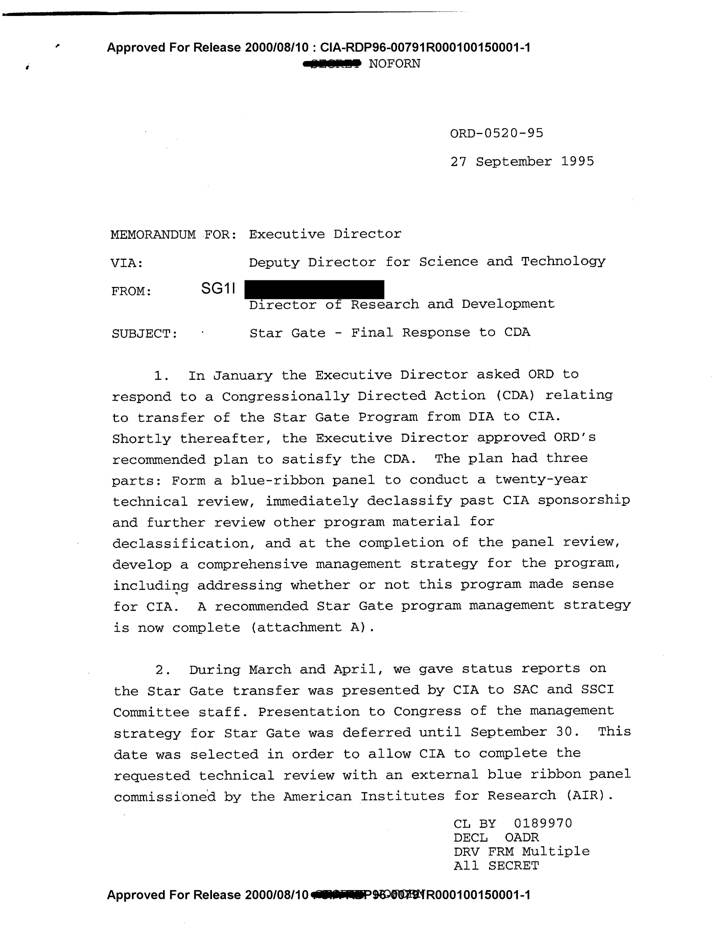
- The end of STAR GATE. A September 27, 1995 CIA paper recommends ending remote viewing operations and research, quoting a review that found remote viewing information “vague and ambiguous.”STAR GATE – Final Response to CDA · doc
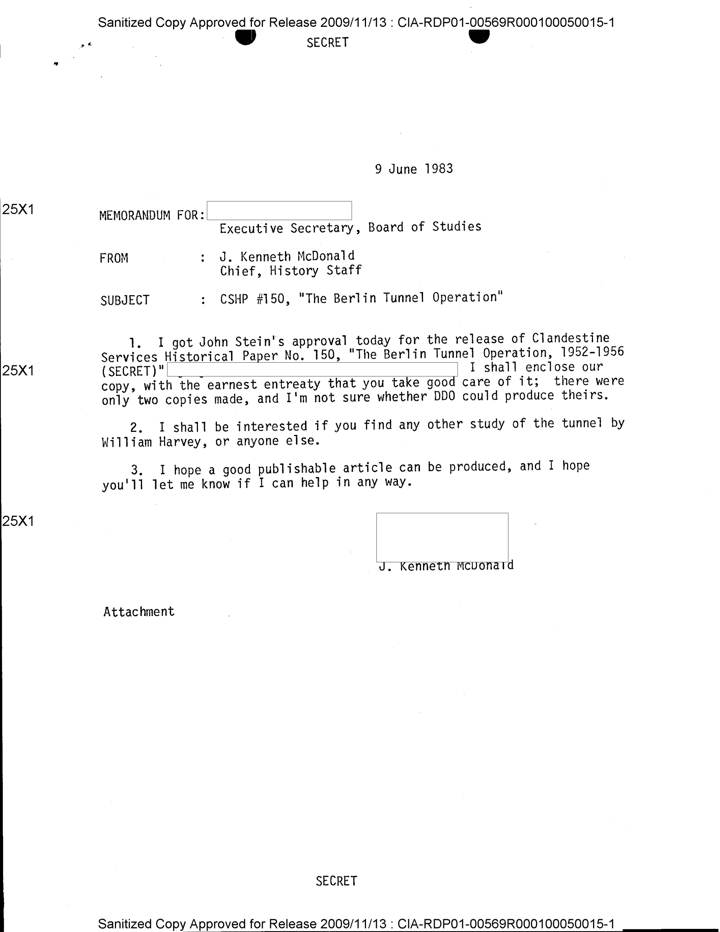
cia-rdp96-00791r000100150001-1, p. 2 - The Berlin Tunnel history. A June 9, 1983 memo from the chief of the CIA History Staff records approval to release Clandestine Services Historical Paper No. 150, “The Berlin Tunnel Operation, 1952–1956,” to the Board of Studies and sends the History Staff’s copy, noting that only two copies were made.CSHP #150, The Berlin Tunnel Operation · doc
cia-rdp01-00569r000100050015-1, p. 1 - Why Powers’ U-2 came down. A report quoted in a history of the Lockheed U-2 finds nothing wrong with the aircraft that would explain the May 1, 1960 loss, and concludes it had to be assumed the plane “had been hit at high altitude by a missile, as stated by the Russians.”The Story of the Lockheed U-2 Airplane · doc
cia-rdp90b00170r000200280023-8, p. 13
Our team picked more records from this cabinet on its Finds tab, including a CIA file on remote viewing tests at Stanford Research Institute.
How to search the CIA files here
Sign up for the alpha. Once your invite arrives, open the CIA CREST cabinet, or tick it with any other cabinets, and search by exact words, with AND, OR and NOT, or by meaning, to find passages about an idea even when the words differ. Each result lists a record that matched, with the matching passage when there is one; open it to read the record and, where one is available, its original scan. Ask Octopus can also answer a question in plain English, with citations to the records.
Related cabinets: JFK Records, which hold many CIA files of their own; Iran-Contra; and every cabinet about spying and surveillance.
For UFO records, read the CIA files beside the Air Force’s own in the Project Blue Book files. A September 1971 article in CREST on the 1956 Lakenheath radar and visual sightings compares its account with “the Bluebook file” (doc cia-rdp81r00560r000100010010-0, p. 2), and Blue Book’s case file on Bentwaters-Lakenheath is in that cabinet. For surveillance, the MLK files hold the FBI’s records of its surveillance of Dr. King alongside CIA records released in 2025.
Questions about the CIA files
What is CIA CREST?
CREST, the CIA Records Search Tool, is where the CIA has released its historical declassified records since 1999. Until 2017 it could only be searched on computers at the National Archives in College Park, Maryland.
When were the CREST files put online?
The CIA posted them in its online Electronic Reading Room on January 17, 2017: about 930,000 documents and more than 12 million pages.
Are these all of the CIA’s files?
No. CREST holds historical records the CIA has declassified, some with parts still blacked out. It does not include records that remain classified.
Where did The Octopus Files get its copy?
From the Internet Archive’s mirror of the CIA reading room (items CREST-1 to CREST-4, uploaded in May 2017 by Michael Best). Each record keeps its CIA document number, which identifies it in the CIA reading room.
Background drawn from each release’s official pages and our intake records, written November 19, 2026; counts in the facts above are from that day. The guide draws on the official release pages and on the records in this cabinet, checked November 19, 2026; its cabinet count is from the archive as of November 21, 2026.